In recent years, the role of data in businesses has evolved significantly. Instead of simply collecting data and creating reports, companies now use data daily to guide both strategic and tactical decisions.
Business Intelligence (BI), also known as data analytics, helps organizations make sense of their data and use it effectively. As technology advances quickly, the methods of using BI are also changing, making it an essential skill for students interested in careers in information technology.
If you’re looking to learn about BI, this blog will provide insights into what to expect, the future opportunities, and the challenges you might encounter.
What Is the Business Intelligence Course About?
You will learn how to analyze data and create useful insights for a business through a Business Intelligence course by:
- Collect data from different sources
- Clean and organize data properly
- Use SQL to work with databases
- Create reports and dashboards using tools like Power BI and Tableau
- Understand business problems using data
The main goal of this Business Intelligence course is to help students learn how to analyze data and present that information clearly. This will enable businesses to make better decisions. The course will include practical, hands-on experience with real data. Students will create dashboards and develop professional skills that can be immediately applied in the workplace.
Is Business Intelligence Still in Demand?
The demand for Business Intelligence (BI) is growing.
Today, businesses collect many types of data. They want to understand this data to improve their operations. This creates a need for BI professionals to help.
Many industries and professions hire BI professionals, including:
- Healthcare
- Finance
- E-commerce
- IT companies
As long as businesses use data to make daily decisions, the demand for Business Intelligence (BI) professionals will keep growing.
Even with rapid advancements in AI technology, the field of Business Intelligence will not disappear. Although tools are getting smarter, businesses will still need skilled professionals to assist them.
- Understand data
- Ask the right questions
- Make decisions based on insights
Business Intelligence (BI) is a strong career choice for students thinking about their future. It offers good job prospects and is likely to remain important in the coming years.
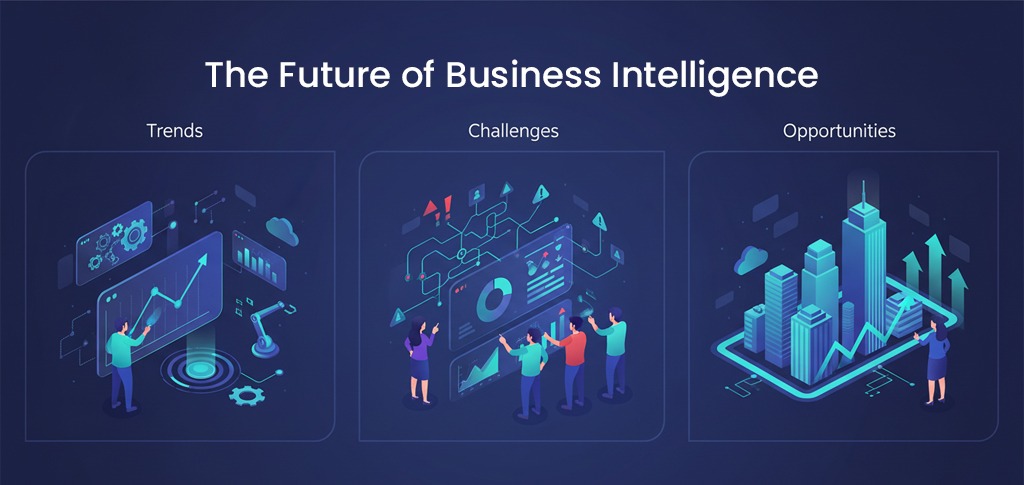
Future Trends in Business Intelligence
Business Intelligence is growing fast, and new trends are shaping its future.
Artificial Intelligence and Automation in Business Intelligence
Modern technological advances in business intelligence create more sophisticated analysis of business intelligence, creating automatic ways to find trends and insights from data. This will speed up analysis but human interpretation still plays an important role.
Real-Time Data
Businesses want instantaneous access to their data versus relying on delayed reports. Live dashboards are becoming commonplace across many business industries.
Self-Service Business Intelligence
Business Intelligence tools can now be used by non-technical users. This means a larger number of employees within an organization can use the data independently without depending upon a technical developer.
Cloud-Based Business Intelligence
Data storage as well as business intelligence equipment is being shifted to the cloud. Larger organizations have the ability to retrieve data from anywhere and easily scale business intelligence applications based on changing business requirements.
Challenges You May Face While Learning BI
Students new to BI face many challenges. These challenges include:
1. Understanding Data: While it is easy to learn tools, it can be difficult to learn how to think logically when using them. It takes practice to learn how to use data to think logically.
2. There are so many tools: There are a ton of tools available to use, which can lead to confusion. Focus on the basics and do not try every tool available.
3. Lack of Projects: Only learning theory is not enough. Without having completed projects, it will be hard to find a job.
4. Data Problems: In the real world, data is often very dirty. Learning how to clean and prepare data is a critical skill.
Using a structured way to learn can make things easier. RP2 comprehensive Data Analytics & Business Intelligence Professional Program helps students clear these challenges with simple teaching and practical learning.
Opportunities in Business Intelligence
BI offers strong career opportunities for students.
Job Roles You Can Get
- Data Analyst
- BI Analyst
- Reporting Analyst
- Dashboard Developer
Industry Demand
Almost every industry needs BI professionals:
- Healthcare
- Finance
- E-commerce
- IT services
This makes BI a stable and growing career option.
Career Growth
With experience, you can move into:
- Senior Analyst roles
- Data Engineering
- Analytics or leadership positions
Conclusion
Organizations are increasingly relying on Business Intelligence as a primary tool for improving their operations. In today’s fast-paced world, companies are looking for skilled professionals who can analyze data to generate valuable insights.
Students who pursue BI as a career will benefit from a growing industry that has a strong demand for qualified candidates and provides numerous growth opportunities. The success of individuals who enter the field will depend on establishing a solid foundation, dedication to improvement through practice, and experience with real world projects.
If you want to begin a career working with data, it is crucial that you find a quality training program, such as a Business Intelligence Professional Course in Kochi. Upon completing your Business Intelligence training, you will have the knowledge and abilities necessary to succeed in this profession.